Tuesday, November 10, 2009

Wednesday's Have You Heard

Cover that cough (with your elbow): Looking for the latest data on the H1N1 epidemic? Attend session 5093, “Latebreaker: 2009 H1N1 Influenza — Status Update and Lessons Learned from CDC,” from 10:30 a.m. to noon in Marriott Grand Ballroom Salon G.

Where’s the beef (been)?: If you’re planning to go with meat for lunch, this may not be the best session to attend right before lunchtime. But, on the other hand, you should probably have those veggies anyway. You decide at session 5104, “Meat Matters: Effects of Industrial Meat Production on Human & Environmental Health,” in room 103C of the Pennsylvania Convention Center.

Pride in health: Unfortunately, gay, lesbian, bisexual and transgender youth often suffer from disproportionate rates of certain health problems, especially when it comes to mental health. To hear about some best practices in reaching out to and helping this vulnerable population, consider attending session 5170, “LGBT Youth: Research, Policy and Health Outcomes,” from 12:30 p.m. to 2 p.m. in room 111A of the convention center.

Federal send-off: Before you hop in your trains, planes and automobiles, don’t forget to attend the Annual Meeting’s Closing Session from 2:30 p.m. to 4 p.m. in Ballroom A of the convention center. This year, the send-off session features panelists Howard Koh, assistant secretary for health at the U.S. Department of Health and Human Services; Mary Wakefield, administrator of the Health Resources and Services Administration; and Yvette Roubideaux, director of the Indian Health Service.

A woman's burden

The postcard image of a woman balancing a water jug on her head might at first seem exotic and mysterious, but in reality it is anything but.

In many developing nations, the burden of insufficient water often falls — literally — on the shoulders of women. According to speakers at a Tuesday morning session on water and women’s health, collecting and managing a household’s water supply puts women at risk for a host of illnesses and injuries, including head and back injuries related to carrying the 40-pound jugs on their heads.

Fetching heavy loads of water also puts women at risk of encountering violence and abuse at the water source, being involved in pedestrian road fatalities, sustaining injuries from falling, developing pregnancy complications and losing opportunities related to education and employment. In one study, women in India even said the heavy jugs wore off their hair.

In more than two dozen developing countries, collecting water is predominantly a woman’s responsibility, said presenter Gopal Sankaran of West Chester University of Pennsylvania, who noted that it takes about three hours a day to collect enough water to meet the drinking, cooking and basic hygiene needs of a family of six. Fetching the water requires women to carry the jugs over mountainous terrain, and once home, the water is often allocated first to the men in the household, even to the exclusion of infants and children.

In many developing nations, children start carrying water at an early age, said fellow presenter Padmini Murthy, of New York Medical College School of Public Health and who's also covering the APHA Annual Meeting on Medscape's public health blog.

“They start training the girls at about age 4, and will start with a little bowl of water and work up,” Murthy said, noting that the age at which water-carrying begins varies by region.

“Immediate gains from nearby access to safe drinking water will result in improvement in women’s health and reduced women’s workload,” said Susan Sorenson of the University of Pennsylvania in Philadelphia.

— T.D.J.

No bailouts here

Tuesday afternoon’s session on the economy and public health was timely for the APHA Student Assembly to take on in light of this country’s financial woes.

However, the topic that caught this blogger’s attention was on the protective health benefits of microfinance in the developing world.

I’ve heard a little about microfinance, made famous by Professor Muhammad Yunus’ Grameen Bank, but I hadn’t heard about it in the context of public health. Empowering people to use their own skills to free themselves from the depths of poverty using modest loans? Sounds good to me! And it may help improve health outcomes associated with poverty, malnutrition, lack of immunizations and poor sanitation? Even better!

According to presenter Chethan Bachireddy, a medical student at Yale University, microfinance can be a powerful tool to lift people out of poverty and improve health outcomes. Bachireddy studied the use of microfinance as a coping mechanism during Indonesia’s financial crisis. He found that even in dire economic times when loans were scarce, individuals who had previously used microfinance were better able to save money. Ultimately, they tended to weather the economic crisis better than others.

Bachireddy said the poor need more safety nets, as illustrated by his example in Indonesia.

“I find it counterintuitive that the poor are the most vulnerable, yet they are the least likely to have access to things like health care and credit,” he said.

For more on microfinance, check out the Financial Access Initiative, a consortium of researchers from New York University, Yale and Harvard who are looking into ways the financial sector can help low-income families in developing nations. What are your thoughts on microfinance as a means of reducing poverty and improving health status?

— P.T.

A little birdie told me so: Tweet of the Day

Tuesday's Tweet of the Day from Annual Meeting Twitterers using the #apha09 hashtag comes from Twitter user Kate_Morrison:

"Overheard at #apha09 'everyone has purell not candy this year'"

Nice to see public health workers walkin' the walk and talkin' the talk!

World Health Day 2010: 1,000 Cities, 1,000 Lives

Turns out our Annual Meeting presenters aren’t only leaders in public health, but some are comedians as well. At a Tuesday afternoon session on megacities and health, presenter David Vlahov opened with a quote from a “14th century” mystic.

“Make me one with everything,” the mystic said….as he ordered a hot dog. (The audience cracked up, with the guy sitting behind me calling it a “zen moment.”)

But on to non-laughing matters. Vlahov, director of the Center for Urban Epidemiologic Studies at the New York Academy of Medicine, spoke about tackling health issues in megacities (generally defined as cities with more than 10 million residents) and growing cities. The topic seems especially pertinent, as 60 percent of the world’s population will be living in cities by 2030.

While there are some diseases that may flourish in cities, there’s no “urban genotype,” Vlahov said, which is why health workers and researchers must focus on improving the living conditions and other social determinants that affect health.

“We have to think about health beyond health services,” Vlahov said.

To learn more about this growing issue, visit the Megacities and Health Project Blog, which is also a space for people interested in a proposed book about megacities that would be published by APHA Press. You can also visit the International Society for Urban Health. Or you can start getting ready for World Health Day 2010, which will focus on urban health with a theme of “1,000 Cities, 1,000 Lives.”

— K.K.

Reach out and touch someone

If you’re trying to expand your online and social media outreach to improve public health, I have a nice little inside scoop for you.

The folks at the Office of Disease Prevention and Health Promotion are coming out with a “Health Literacy Online” guide to developing user-friendly Web sites and other online tools in January. Want to be on the distribution list? Send an e-mail to Health Literacy Fellow Sean Arayasirikul at sean.arayasirikul@hhs.gov (and, yes, he said it was OK for me to post his e-mail address on our blog).

He and his colleagues have done a lot of study into how to reach people with low health literacy. A redesigned www.healthfinder.gov site, which took five years from conception to launch, shows some fruits of that labor. Pages are less text-heavy and give visitors easy-to-follow small steps to improve their health. We can all get behind that.

“We all kind of want to be snazzy when we present information, but a linear, simple approach works best,” Arayasirikul said at a Tuesday afternoon session on health literacy in the digital age.

While only 37 percent of U.S. adults with less than a high school education use the Internet, more than 94 percent of adolescents and young adults go online regularly. That means any public health education message and other outreach had better have an online presence in the near future because that’s the way to reach people, whether it’s via a computer, smartphone or other device.

“Information, because it can be accessed anywhere, I think, can be leveraged more,” said Ana Tellez, who works with Arayasirikul at the ODPHP.

Session attendees brainstormed on the challenges of using social media and other online tools to expand public health outreach, and one common gripe was the fact that many workplaces aren’t exactly hip to the happenin’. Some bosses ban Facebook use in the office, and the review process for online postings can bog down efforts to get credible information out there quickly.

Be persistent, Tellez said, and take it one bite at a time.

“Don’t ask for a whole cake,” she said about expanding social networking and other online efforts. “Ask for a little sliver.”

— D.C.

Hit 'send' for better health


Talk about looking into the future of public health. This public health blogger was transfixed by the innovative, amazingly creative ideas discussed during a Tuesday morning session on mobile technology and health. With more than 4 billion mobile phones globally (and that number probably changed in the two seconds it took me to write that), it makes perfect sense to use the platform to reach people with what can be life-changing health information.

Paul Meyer, head of Voxiva, a company dedicated to “mobile centric information solutions,” offered the most insightful quotes of the session. While the United States is a leader when it comes to the Internet, in mobile health, “we’re the followers,” he said. The rest of the world went mobile much quicker than us in the United States because the Internet is simply not accessible for much of the world’s people, he said.

“So, even if you have the world’s greatest Internet strategy, you’re still only halfway there,” Meyer said, adding that soon it won’t be a matter of if you should have a mobile strategy, but a matter of defending “why you don’t have a mobile strategy.”

After all, he said: “The best Web site in the world isn’t going to remind you to take your pill in the morning.”

Meyer’s new endeavor, Text4Baby, is scheduled to launch this January. Created in partnership with groups such as HHS and the National Healthy Mothers, Healthy Babies Coalition and supported by telecom companies, the free service (in fact, the first free mobile texting service in the United States) will send expecting moms three healthy messages per week, and after giving birth, the mobile service will start sending different tips, like info on child vaccine schedules. (Wanna copy of Meyer’s Annual Meeting presentation? Send a text to 311411.)

Finally, presenter Josh Nesbit, head of FrontlineSMS: Medic, told the story of his journey to the forefront of the mobile health movement. Working in Malawi, Nesbit observed how difficult and burdensome it was for community health workers to keep connected with the region’s tiny (very tiny) handful of physicians. So, with a small grant and a creative touch, Nesbit provided the workers with cell phones and the know-how to keep in touch with not only the physicians, but with each other. With the new mobile technology, the workers could do things like text a patient’s HIV/TB drug adherence report to a doctor. How freaking cool is that?

The big lesson, Nesbit said, is making sure the technology works for the people using it.

“If it doesn’t work for the end user, then it doesn’t work, period,” he told session attendees.

Find out more by visiting FrontlineSMS: Medic and read how text messaging is literally saving people’s lives. You can also visit CDC’s mobile health site for info on how the nation’s top public health agency is using cell phones to improve health here and around the world.

Wanna donate your old phone to help others? Visit Hope Phones to find out how to donate your old cell phone to a medical clinic in a developing country.

And one more thing: For more in-depth coverage of this new frontier, check out these two recent stories from The Nation’s Health, APHA's newspaper: "RU healthy? Public health efforts take on text messaging" and "Cell phone popularity a barrier for public health data collection: More Americans forgoing phone landlines."

— K.K.

The collective well

Forget the old adage "don’t try this at home." Tuesday morning’s session on “Public Health and Global Water Issues: From Policy to Collective Action” defied the age-old golden rule.

The session featured an outstanding group of speakers from various organizations working collectively to pool human capital and expertise on water resource management to drive collective action through the Philadelphia Global Water Initiative.

PGWI President Stanley Laskowski envisions the organization as a model and hopes other cities will duplicate its efforts to build their own networks around global water supply issues. He stressed the need to “connect more nodes and build collaboration.” PGWI is pitching in to help the world meet the UN Millennium Development Goals for water and sanitation on a global scale, and they’re doing some pretty cool work.

Human rights activist and founder of Traveling Mercies, Aldo Magazzeni, is one of PGWI’s collaborators who has done extensive work throughout Afghanistan building water systems so that villages have access to clean and safe drinking water. His presentation was a composite of remarkable images of the villages and people he's helped over the years. He told stories of the impacts that sanitation, hygiene, and safe drinking water have on the communities he’s served. And although he claims his work is only a drop in the bucket, over the past seven years, Aldo has helped build 14 large water systems in Afghanistan.

Why is all this so important? Because the statistics are just unacceptable: Did you know a child dies every 15 seconds from a water-related problem? Even worse, in the countries where the needs are greatest, organizations don’t have the resources or technology to handle these water crises. And according to Bob Giegengack, of the University of Pennsylvania’s Department of Earth and Environmental Science, “a large number are suffering from avoidable water shortages.”

“There is enough water to go around,” he said. “We must use it more responsibly.”

— M.S.

Soldiering on

“Winter soldiers,” a term coined as a result of a 1776 writing by Tom Paine, describes people who stand up for the soul of their country, even in its darkest hours:

“These are the times that try men’s souls. The summer soldier and the sunshine patriot will, in this crisis, shrink from the service of their country; but he that stands it now, deserves the love and thanks of man and woman.”

Thus, it is fitting that winter soldier is also the name of a documentary filmed at an event of the Iraq Veterans Against the War in 2008. The resulting film, “Winter Soldier: Iraq and Afghanistan,” was screened at APHA’s Annual Meeting this morning, part of the meeting’s many film and technology sessions.

In the film, former servicemen and women describe, in brave detail, their experiences during and after their military services. With raw emotion on display, they took on torture, sexual harassment, veterans’ health care services, post-traumatic stress disorder and suicide attempts.

Their anger, disappointment and shame shone through as they told filmmakers about picking up the pieces of their lives after the military failed them. Several veterans described the stigma associated with seeking mental health treatment (the so-called “suck it up and drive on” mentality) — a mentality so powerful that many servicemen and women stay silent for fear of destroying their careers if they were to admit to suffering from PTSD or depression.

Perhaps the strongest voices speaking out against the wars in Iraq and Afghanistan are those who were there and can articulate the human tolls they personally witnessed and suffered. Let them tell you about it themselves — video segments of “Winter Soldier” are available online.

To find more APHA Film Festival events, check your program for "Film and Technology" sessions.

— P.T.

Eye of the tiger


Thanks to unseasonably mild temperatures and some of the most cheerful personalities I’ve ever come across, the second annual APHA Physical Activity Special Primary Interest Group 5K Fun Run/Walk really lived up to its name this morning.

I’m not kidding. It really was fun.

Turnout was about equal to last year’s inaugural event in San Diego, with 50 or so sleepy-eyed but energetic APHA-ers gathering in the pre-dawn darkness to squeeze in some exercise before a day of meetings. Another draw this year was the chance to run those “Rocky” steps at the Philadelphia Museum of Art. They’re not as tough as they look, especially if you take them one at a time.

We had to contend with some city traffic (groups of us stopped at red lights along the route and figured it was interval training). That gave us a chance to talk public health, which is always a good thing.

APHA member Dick Wittberg told me about a project in his home state of West Virginia that found school kids learn better when they’re fit. Jessie Kimmick, who so graciously let me snap her photo on the way back down the Rocky steps, was enjoying the mild morning because back home in Minnesota, running outside this time of year takes layers of technical fabrics and lots of steely resolve to brace the icy chill.

But we all figure if President Obama can find time to exercise, we can too. We know obesity is a big killer in America. The SPIG folks are working to bring attention to the need to incorporate physical activity into public health policy and advocacy. They also want us to be moving every day. You can do it!

Special thanks to SPIG Chair Steven Hooker and member Genevieve Dunton for organizing this year’s run. I’m looking forward to running with them in Denver in 2010.

Kick off the last day of this year’s Annual Meeting by joining SPIG members for a water aerobics session tomorrow morning at 6:30 a.m. (I know, but then you’ll be alert for the rest of the day) at the Hyatt Regency, 210 S. Christopher Columbus Blvd.

— D.C.

Top photo: Jessie Kimmick shows off her "Rocky" muscles during the Physical Activity SPIG's 5K Run/Walk. Bottom photo: Runners celebrate completing their run. Photos by Donya Currie

Open wide

American Dental Association President Ron Tankersley showed grace under fire when a packed room of oral health advocates pressed him on why his organization has opposed the use of dental health therapists to increase access to care.

APHA policy, as well as the majority of people at the oral health session yesterday, supports the Alaska Dental Health Aide Therapist program and other outside-the-box solutions to the continuing access to oral health care crisis in the United States. The American Dental Association initially opposed the creation of the dental therapist program, which takes members of Alaska Native tribes and trains them on providing oral health services in communities where oral health services can be a plane ride away.

Now the House version of the federal health reform bill includes a provision forbidding the Indian Health Service from setting up the dental health therapist program anywhere but Alaska. Huh?

The continued opposition to “unsupervised” dental health work force members, be they dental hygienists or dental health therapists or others with oral health training, “is neither evidence-based nor good for public health,” said Scott Tomar, president of the American Association of Public Health Dentistry and a University of Florida professor (go Gators!).

Tankersley, who did get a round of applause and even a hug after being grilled by session audience members, said the American Dental Association understands “that by having allied personnel do more, everyone would be more effective.”

“The ADA takes a lot of hits because we tend not to be nimble enough,” Tankersley said. “We are cautious, I admit.”

The session, by the way, was centered on an Institute of Medicine Oral Health Workforce Report released in August that calls for innovative solutions to the oral health access problem. As with many issues, “we really are short on data that helps us make good policy decisions,” said Marcia K. Brand, deputy administrator of the Health Resources and Services Administration, which now is funding an oral health study.

“There is no doubt that we’ve got to collaborate,” Brand said. “It’s going to take everyone to increase access.”

— D.C.

Feeling green?

Mitigating the effects of climate change and its negative impacts on human health requires a strong cross-section of public health advocates. Monday afternoon’s session on climate change, nursing and public health brought together a core group of public health experts hoping to confront these challenges.

The session brought together lead researchers, experts and practitioners to first provide a broad federal climate change framework and then hone in on specific (and successful!) instances of state and local actions that demonstrate momentum on reducing our emissions.

John Balbus, of George Washington University’s School of Public Health, noted how changed the climate (pun intended) is this year when it comes to discussions of global warming and proposed federal climate legislation. In contrast to the landscape during last year’s APHA Annual Meeting, the urgency for passing climate legislation has stemmed, he said.

Balbus described how the election and the new Congress really changed the game.

"There was lots of momentum last year and then health care reform happened,” he said.

Despite the slowdown (and the recent economic meltdown), the session speakers expressed strong optimism. Balbus detailed examples of federal regulations as well as Environmental Protection Agency efforts through its soon-to-be released endangerment finding that highlight lots of “activity on all fronts that can have cascading health benefits if done right.”

M. Kathleen Murphy, health services coordinator for Milwaukee Public Schools, provided a poignant case study of how the Milwaukee school system worked to effectively limit pollutants that disproportionately affect the city’s lower-income communities. As one of the leading U.S. cities with poor air quality and high rates of asthma, the city sought real reform. Milwaukee officials conceived and more recently implemented a host of strategies to limit bus emissions and other efforts to improve the region’s air quality. For example, they have stipulations in contracts with city delivery trucks and buses that reduce emissions by incorporating anti-idling requirements in most transportation vehicles. What a simple, yet awesome idea.

Balbus’ closing remarks captured the important role the public health community has in facilitating real change on such issues.

“We’ve come a long way,” he said. “There’s a lot of work that needs to be done. A lot of advocacy is needed. The health care sector is needed to continue to demonstrate its own greening and that these goals can be reached.”

— M.S.

So much free stuff, so little time


Only two days left to make your way around the more than 700 booths at the Public Health Expo. Hope you have your walking shoes on...

Photo courtesy Jim Ezell/EZ Event Photography

Monday, November 9, 2009

Tuesday's Have You Heard

Cool runnings: For all you early birds, APHA’s Physical Activity Special Primary Interest Group is hosting its second annual 5K Fun Run/Walk. Runners and walkers should meet at 6:15 a.m. in the lobby of the Downtown Courtyard Hotel, the corner of Arch and N. Juniper Streets, and the route will take you along the Benjamin Franklin Parkway to the museum steps made famous in “Rocky.” (Yo Adrian!)

Water women: As water is the theme of this year’s Annual Meeting, check out session 4005 on “Water and Women’s Health,” from 8:30 a.m. to 10 a.m. in Marriott Franklin 11. Those that get to the session on time can hear an especially interesting presentation on the health effects that women in developing nations encounter from having to carry water over long distances — a burden that “literally and figuratively” weighs such women down.

Harvest time: This blogger is lucky to live in a city with more than a handful of local, fresh farmer’s markets. But not everyone is so fortunate to have regular access to fresh, affordable fruits and vegetables. Learn how you can bring locally grown foods to your community (and help support local farmers) by attending session 4284, “Locally Grown: Strategies to Support Local Economies and Public Health,” from 2:30 p.m. to 4 p.m. in room 107B of the Pennsylvania Convention Center.

And the winner is: Come cheer on your fellow public health professionals during APHA’s annual Public Health Awards Ceremony and Reception from 6:30 p.m. to 8:30 p.m. in room 108A of the Pennsylvania Convention Center.

No butts about it

Even if you’re an environmentalist or a tobacco control expert, you may not have thought much about the public health toll of the 1.6 trillion cigarette butts disposed each year worldwide.

More than just litter, cigarette butts are toxic waste that leaches cancer-causing chemicals into water and air.

The speakers at today’s session on “Banning Butts” are looking for ways to frame the issue, build scientific evidence and support regulations that will help alleviate the deluge of tobacco waste that pollutes our cities and enters our watersheds.

One consequence of this waste entering water supplies is the toxicity to marine life. One study discussed by investigator Rick Gersberg of San Diego State University found that a concentration of about one smoked cigarette butt per liter of water killed half the fish studied in a four-day period. Gersberg said potential sublethal effects and bioaccumulation should be considered in future studies, as well as the identification of the specific compounds responsible for the toxicity.

Elizabeth Smith of the University of California at San Francisco spoke about her very clever look into tobacco industry documents. She found out (spoiler alert!) that the last thing industry wants is for “antis” and “greens” to band together to support regulation of tobacco waste, which most likely would mean that industry would be responsible for paying for cleaning up disposed filters. She also found some unintentionally funny suggestions from a focus group of smokers that the cigarette industry convened. To deal with the filter waste, why don’t the companies give it another life by making it usable as food for animals or a breath mint for humans, perhaps? Yeah, sounds real appetizing.

For now, filters are still non-biodegradable toxic waste that isn’t regulated. Today’s speakers are trying to change that by building public awareness and supporting regulations that would make the industry that creates the waste financially responsible for dealing with it. That’d sure be another kick in the butt to the cigarette companies, wouldn’t it?

To get involved in getting rid of cigarette waste, visit the Cigarette Butt Pollution Project.

—P.T.

Strength in numbers

Have you heard that African proverb, “When spider webs unite, they can tie up a lion”?

It’s true. Just ask anyone who’s successfully mobilized an advocacy campaign around a public health issue.

“Our strength is greater when we are united,” said Jirair Ratevosian, MPH, who shared advocacy tips during a Monday morning session on mobilizing a campaign around a public health issue.

One of his charges as deputy director for public policy at the American Foundation for AIDS Research has been to push for an end of the ban on federal funding for needle exchange programs.

Whether your issue is national, state or local, Ratevosian suggests breaking it down into bite-size steps:

1. Bring people together.
2. Set smart, measurable objectives.
3. Get the facts (these help determine your advocacy priorities).
4. Choose your targets (who has the power to make the change you want?).
5. Understand the policy- and decision-making process (this is especially important for voting timelines on legislation).
6. Build alliances and coalitions.
7. Choose your tactics (this could include letter-writing campaigns or Capitol step protests, depending on your group’s personality).
8. Renew, review and re-energize.

Step eight has been important in the needle exchange discussion, Ratevosian pointed out as he displayed an old 1987 letter from then-HHS Secretary Donna Shalala to U.S. Sen. Tom Harkin asking for an end to the federal funding ban.

Every presenter during the advocacy session said success hinges on consensus-building. But as Steven J. Huleatt said, it’s “not an easy process. It’s not necessarily a pretty process.” He was one of the local Connecticut health directors fighting a drastic funding cut this year.

APHA
Governing Councilor Durrell Fox talked of the long effort to gain national recognition for community health workers.

“We had to find a way to find unity,” Fox said about community health workers, who are as diverse a group as you’ll find anywhere in public health. “A core, committed group was key to our mobilization efforts.”

Session moderator José Ramón Fernández-Peña would also like to remind us that signing on to APHA Action Alerts — “those annoying e-mails from the APHA Action Board” — is one easy way to tie up that lion.

— D.C.

Just tweet it!


Today, APHA held its first-ever Tweet-up. What's that, you say? (No worries, I didn't know either.) It's a gathering of fellow public health Twitterers who get together to talk about social media and, of course, do a little tweeting from a common event. So, why should public health enter the Twitter and larger social media realm. Just ask Twitterer @healthpolicygroup.

"I think social media is an exciting realm," said @healthpolicygroup. "Twitter is especially interesting in that it makes you be precise and consice in what you want to communicate. And in public health, that's very important."

Twitterer @publichealth couldn't agree more: "There is a real benefit to using social media tools in public health, particularly in communicating information and interacting with other users."

Still wondering what Twitter is? Check out APHA's Public Health Twitter!

What's your story (morning glory)?

There are some new guests at APHA’s 137th Annual Meeting showcasing the importance of public health professions in a very big way. You may be familiar with them if you, like this blogger, are an avid National Public Radio fan. StoryCorps has made its way to APHA!

StoryCorps, an independent nonprofit partner of NPR, is one of the largest national oral history projects. The group stages interviews (that are more along the lines of an informal conversation), between two people who have an intimate or personal relationship with one another. Each interviewee selects the person who will interview them. This may be a mentor, a colleague, a friend or anyone they are comfortable with. The goal is to capture, preserve and honor the story behind one’s life, and in APHA’s case, StoryCorps is doing just this for leaders in the field of environmental public health.

StoryCorps founder and radio documentarian Dave Isay, conceived of the project as a way to give people the time and space to tell their stories. Each conversation is recorded on CD and preserved at the Library of Congress.

Throughout the APHA Annual Meeting, StoryCorps is providing a dynamic group of 17 APHA members and leaders in the environmental public health field with the opportunity to tell their stories. One facilitator working with StoryCorps noted that this venue is particularly fitting, as public health professionals have a “strong sense of purpose in their respective areas of expertise and this passion is conveyed through the recorded conversations.”

This blogger got a glimpse at one scheduled interview between APHA Executive Director Georges Benjamin and his wife Yvette Benjamin. The two emerged from the interview room excited to share their stories with the world.

“We’re a public health family,” Georges Benjamin said. “Capturing this story is wonderful for the public record.”

Yvette Benjamin emphasized the importance of providing younger generations, especially those with public health interests, with a deeper understanding of the context in which “we’ve gotten to where we are today.”

When asked if they learned anything new about each other in the process, both Benjamins smiled and shook their heads.

“After 30 years of marriage, there’s not much new news to share” said Georges Benjamin.

Check back on the environmental public health section of the APHA Web site to access the stories in the coming weeks.

— M.S.

A little birdie told me so: Tweet of the Day

Today's Tweet of the Day from those of you using the #apha09 hashtag is from Twitter user iamrrm:

"Hey #APHA09 talk reminds me that I have not had a cigarette in 5 months! Yay me! (Now if I could just see my feet again.)
"

Congrats!

Healthy People 2020 needs you!

When Penelope Slade-Sawyer touted the life-saving value of prevention this morning during a session on Healthy People 2020 and said “I hope I’m preaching to the choir here” it was clear that she was, indeed.

“The ultimate goal of Healthy People is to have a healthier nation, and prevention is how to get there,” said the director of the U.S. Health and Human Services Department’s Office of Disease Prevention and Health Promotion to an overflow crowd.

Slade-Sawyer heads the arm of HHS in charge of getting Healthy People 2020 in shape and ready for public distribution by the end of next year. One of her eye-catching pie charts drove home the woeful state of prevention funding — 95 percent of current health care dollars pay for curative medicine, and just 5 percent for preventive measures.

The Healthy People initiative has grown exponentially since kicking off in 1979. Healthy People 2010 had 467 goals, and it looks like Healthy People 2020 will have close to 600.

One challenge is to balance between the traditional “encyclopedic approach” and one that’s user-friendly. That’s where you come in.

“Give us your opinion,” said Slade-Sawyer, at the Healthy People 2020 site. And in the never-ending search for evidence-based best practices, “evaluate what you do. Let us hear about it.”

New topic areas for Healthy People 2020 will include adolescent health, quality of life, social determinants of health and health care-acquired infections, to name a few. Carter Blakey, known affectionately by her HHS colleagues as “Mrs. Healthy People,” said federal health officials are working to make the new objectives more user-friendly than the telephone book-sized Healthy People 2010 that’s been tough to update and cross-reference.

“Hopefully we’ll go farther than just giving you objectives this decade but also give you some strategies,” Blakey said.

The dream is Healthy People 2020 relational databases, with data available down to the county level. People like Richard Klein, chief of the Health Promotion and Statistics Branch of the National Center for Health Statistics, are working to make that happen using GIS mapping technology.

“Funding- and weather-permitting, we hope to have a much better database,” Klein said.

Click here for current Healthy People data.

— D.C.

Press club


Now that this blogger (and formally trained reporter) has finally stopped gushing over these photos, I can tell you what they’re all about. Today, about a dozen sixth-graders from Stewart Middle School in Norristown, Pa., visited the APHA Annual Meeting in Philly to do a little reporting for their school newspaper, the Stewart Healthy Times. Student reporters grilled public health researchers on everything from tobacco to H1N1 flu to how to prevent getting sick in the first place.

To learn more about Healthy Times, a school-based newspaper program that engages students in promoting health, fitness, nutrition and safety, visit the Food Trust, or stop by session 5084 on Wednesday morning from 8:30 a.m. to 10 a.m. in Marriott 413 to hear more about the Healthy Times program.

Above at top and middle: Young reporters from Stewart Middle School show off their press badges and take notes during a news conference. Bottom: Past APHA President Walter Tsou takes questions from the young reporters.

Peak your interest?

At Monday morning’s session on public health in an era of resource depletion, the panelists did their best to put a positive spin on what can be a very depressing topic. Energy, food and water security are daunting issues that will surely test the world sooner than we’d like.

Howard Frumkin, of CDC’s National Center for Environmental Health, highlighted the concept of “peak oil” and its relevance to public health. It’s scary when you realize how much we rely on petroleum products in our everyday lives — and how quickly, relatively speaking, our society became so reliant on petroleum for transportation and the manufacturing of so many everyday products.

Even if you walked over to the conference from your hotel today, you probably used something made from petroleum without even realizing it. Did you put in contacts? Take a medication? Drink from a disposable cup or bottle?

We in public health need to work with our colleagues in transportation, agriculture, housing, planning, architecture, manufacturing, etc. as we work toward a society less reliant on petroleum — because it won’t always be cheap and plentiful. Although Frumkin emphasized the need for planning and educating the public over the more apocalyptic story lines, he still said it’s not a matter of if, but when the dwindling quantities remaining in oil reserves become too difficult and expensive to extract. The scientific consensus is that the world will reach maximum oil production, also known as “peak oil,” sometime between 2005 and 2030.

Turning to water, Wenonah Hauter, executive director of Food and Water Watch, described water access as one of the most devastating crises, but said she is encouraged by a growing grassroots movement to amass political will to improve access to clean water and reduce the massive burden of water-related diseases worldwide.

“The good part of the story is there is this water justice movement that is growing,” she said, as is increased pressure on the international financial institutions she said are responsible for many of the failed policies that have privatized and taxed water out of reach of the people who most need it.

Click here to read more about Food and Water Watch’s take on the Water for the World Act, legislation introduced in Congress to provide clean water and sanitation to 100 million by 2015.

— P.T.

In a good mood? Don't read this

H1N1 flu. The economic recession. Health reform. Just a few issues described as “late-breaking” in a Monday morning session on recent developments affecting public health. Though I can think of a few more words to describe the topics: Huge, overwhelming, scary, exciting, nerve-wracking, stressful, confusing…..

“Stressful” would be a good way to describe Stephen Ostroff’s presentation on H1N1 flu trends in Pennsylvania. The state’s physician general, Ostroff said between 7,000 and 8,000 cases of H1N1 flu are being reported to state health officials each week, constituting an “unprecedented” fall wave of the virus. In fact, instead of describing the surge of flu cases as a “wave,” Ostroff called it the H1N1 “fall tsunami.” Luckily, Ostroff said H1N1 doesn’t seem to be any more virulent than regular seasonal flu, though it does differ in its magnitude of transmission and in the age groups most affected, mostly young people ages 5 to 19. (Squirt. Sorry, that was me. Just applying more hand sanitizer.)

Steffie Woolhandler, a professor at Harvard Medical School and a co-founder of Physicians for a National Health Program, put a bit of a damper on this blogger’s elation over the passage of Saturday’s national health reform bill. Woolhandler predicted that millions of Americans would still go uninsured even if the health reform bill goes into effect, noting research recently published in the American Journal of Public Health that found that 45,000 Americans die every year due to a lack of health insurance. She urged attendees to continue the call for real universal health care, cautioning them to watch carefully as health reform continues its way through the halls of Congress.

“It would be a grave mistake to underestimate the power of the insurance industry,” she said.

Carolyn Cannuscio, a professor at the University of Pennsylvania, reported on health and the economic recession, eliciting a good few chuckles from the crowd as she highlighted businesses that haven’t seemed to suffer: the makers of the canned, inexpensive meat Spam, condom makers and candy sellers. (Perhaps, she said, candy sales can be explained because people are self-medicating?) But with the nation’s unemployment rate above 10 percent, it’s certainly not all laughs. Unemployment or the stress of possibly losing one’s job puts a heavy strain on people’s mental health and well-being, as does the horrific event of losing one’s home to foreclosure, she said. Plus, the research is clear: Lower incomes often lead to greater health risks.

“Are we doing our best to assure the conditions in which people can be healthy,” Cannuscio asked.

Are you?

— K.K.

Life on the inside

Life is hard enough for an adolescent girl or boy, but can you imagine what it would be like if your mom was in prison?

Kids whose mothers are behind bars don’t have it easy, said Jane Siegel, PhD, an associate professor of criminology at Rutgers University. Speaking at a Monday morning session on women and correctional health, Siegel said that over the last three decades the incarceration rate has been increasing far faster for women than for men, even though women make up a small percentage of the U.S. prison population.

Concerned about the health and safety of incarcerated women’s kids, Siegel recently interviewed 17 children — ages 8 to 18 — whose moms had been in a state prison for a year. Most of the children were living with relatives.

Siegel’s research turned up some interesting findings. The good news: “These kids were incredibly resilient,” Siegel said, noting that they have had to overcome obstacles in their lives that most people, even adults, would never dream of having to deal with. The kids she interviewed — nine girls and eight boys — didn’t tend to have behavioral problems and were “all about trying to be just like other kids,” she said, with video games, shopping and hanging out with friends topping their to-do lists.

But the big burden of having a mom behind bars is the “emotional difficulty these kids have to face,” said Siegel, who was struck by the children’s “sense of longing” for family. Most of the kids were sad or depressed, she said, and to make matters worse, the children have to deal with reconciling their negative images of their mothers with their love for their mothers.

“These kids have an awful lot to cope with,” Siegel said.

— T.D.J.

Sounds of music


The Sounds of Philadelphia wowed crowds of APHA Annnual Meeting attendees on Sunday night with their musical revue and fancy footwork.

Photos courtesy Jim Ezell/EZ Event Photography

Get ready for National Public Health Week 2010

I know. It feels like we just celebrated National Public Health Week, but then again, it’s never too late to start planning for next year’s observation — especially since the theme has officially been announced! The theme for National Public Health Week 2010, to take place April 5–11, is “A Healthier America: One Community at a Time,” and will focus on making America the healthiest nation in one generation (if this sounds familiar, it’s because APHA officially has a campaign to accomplish this generational goal — check out the very cool video below.)

Also check out the National Public Health Week 2010 Web site now for info on how to start planning a week of raising public health awareness and building healthier communities where you live, work and play. Or if you’re with us in Philly, visit the National Public Health Week booth, #1442 in the Public Health Expo.

'You’ve gotta tell the truth to fix it'


The newly published third edition of “Health Issues in the Black Community” is a sobering read, but as co-editor Henrie Treadwell, PhD, told APHA members lining up for a signed copy Sunday afternoon, “you’ve gotta tell the truth to fix it.”

Health disparities will vex our country until we pull together to tackle the problem in more than a piecemeal way, she said. And now that the House of Representatives has passed a comprehensive health reform bill, that might actually happen.

“I’m hopeful,” Treadwell said as she signed copies of the book on Sunday afternoon. “In this era of health reform, we might be able to have a smaller book next time.”

Treadwell described the book as a “sad affirmation that we haven’t done enough” when it comes to eliminating health disparities — life expectancy for black Americans is shorter than for white Americans. The book offers chapter by chapter of examples of health issues that hit hard in the black community, from homicide and violence to chronic health conditions, substance abuse and obesity.

“I think this book is a critical read for those who are concerned about health disparities and access to care,” said former APHA President Caswell Evans, DDS, MPH, who co-authored a book chapter on oral health.

Trends outlined in the book include the fact that black boys and men are unlikely to have access to quality health care.

“Their best hope for health care is prison or none at all,” Treadwell said. A turnaround is possible, though.

“It can be done. It really can. I don’t think I would invest all the time and energy to just put words to paper, but to put the inspiration out there,” she said.

And just before the end of the one-hour book signing session, when Treadwell walked across the expo hall to hand-deliver a copy to new Surgeon General Regina Benjamin, MD, she reminded a gaggle of admiring young public health professionals of their important charge.

“We have to work to make this book smaller in the future,” she said to nodding agreement. “We have to fix something.”

To purchase a copy of “Health Issues in the Black Community,” visit the Everything APHA booth at the Public Health Expo.

— D.C.

Above: Author Henrie Treadwell signs copies of her book on Sunday at the Public Health Expo. Photo courtesy Jim Ezell/EZ Event Photography

Sunday, November 8, 2009

Monday's Have You Heard

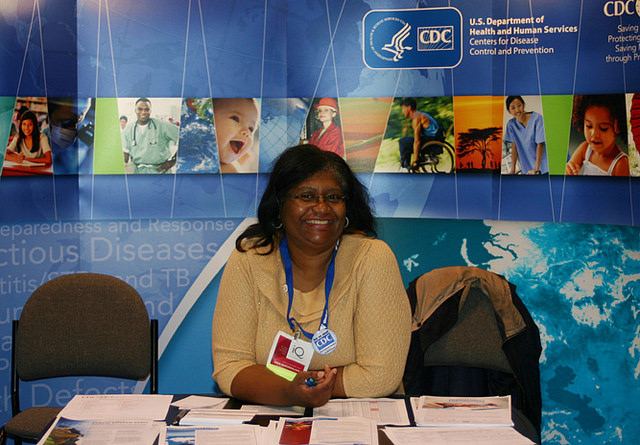
One flu over the cuckoo’s nest: This blogger has been washing her hands like crazy to avoid the flu, and even though my soft skin is suffering, my health is not. So if you’re like me and looking to go flu-free, stop by APHA’s Get Ready booth, #511 at the Public Health Expo, which is being presented in partnership with the Centers for Disease Control and Prevention and offers an extravaganza of free flu materials and information...and free hand sanitizer!

Ready for the next decade?: Already accomplished all the Healthy People 2010 goals in your community? Well, you’re in luck because Healthy People 2020 is just around the corner. To learn more, attend session 3010, “Healthy People 2020: Setting the Health Agenda For the Next Decade,” from 8:30 a.m. to 10 a.m. in Marriott Independence 3.

Action!: Hey you movie buffs! Did ya know the APHA Annual Meeting features its very own film festival? Well, it does and it’s pretty darn cool. Check your programs for a number of film sessions, which you can find by looking for the listing “Film & Technology Session.”

Butt out: Ever wonder if all those nasty cigarette butts we see all over our streets and sidewalks aren’t only ugly, but bad for our health and environment? Find out at session 3191, “Banning Butts: The Environmental Case for Eliminating Tobacco Waste,” from 12:30 p.m. to 2 p.m. in Marriott Grand Ballroom Salon B.

Public health swag!


If you thought you were overwhelmed by the phonebook-sized schedule you were handed at registration, wait until you check out the Public Health Expo. There’s a lot to see and do, and you might even see the U.S. surgeon general milling about — I just did!

I can’t begin to do the expo justice in a short blog entry — but there are plenty of free goodies to be found. Perhaps not surprisingly, a hot item this year is hand sanitizers in every size and shape imaginable.

Luckily, I managed to skirt by the Stata booth, a statistics software business, without too many terrible flashbacks from biostatistics class. No offense to the fine people staffing the booth, I just couldn’t bring myself to linger there.

But, here are a few highlights I would suggest checking out.

If you’re a job seeker, network with some of the organizations offering jobs and fellowships. In particular, the National Biosafety and Biocontainment Training Program was recruiting interested public health graduates, as was the Association of Schools of Public Health. They have a new fellowship in injury prevention and traffic safety that is accepting applications now!

In light of Environmental Protection Agency Administrator Lisa Jackson’s comments on asthma prevalence in the United States, check out CDC’s Emergency Preparedness and Response booth. They have some new materials on asthma, including a report called “Breathing Easier” and a guide for parents called “Help Your Child Gain Control Over Asthma.”

If you’re a big Twitter user, the Johns Hopkins University Center for a Livable Future’s booth has a flat screen TV broadcasting conference attendee’s Tweets.

The National Library of Medicine offered several demonstration sessions today on recent updates to PubMed and other information resources. Check out their booth for more info if you missed that.

You may also score invites to other events at the expo. Physicians for Human Rights is hosting a reception tomorrow from 6:30 p.m. to 8 p.m. in room 403 at the Marriott. It’s open to all with free food and drink as well as great conversation on health and human rights. No need to hold an MD to get involved — the group is looking for new members from all areas of public health.

What did you enjoy at the expo? Tell us about your organization’s booth!

— P.T.

Above: APHA's Get Ready booth

Post-It

Female genital mutilation in Tanzania. The dangerous mix of truck drivers and sleep apnea. School-based obesity prevention. Computer literacy skills among public health nursing students.

If you’re looking for a wide range of public health topics, check out the poster sessions located at the back of the Public Health Expo. They’re compelling, hard-hitting and unforgettable.

“I think it’s hard to conceptualize how different life can be for a different culture,” said Emory University doctoral student Aaron Siegler, MHS, whose poster on female genital cutting prevalence and instrument sanitation among the Maasai tribe of Tanzania highlights the fact that education is a powerful weapon.

His study showed that when girls and women have any education at all, they are less likely to undergo the practice that’s long been considered a rite of passage, even though it's outlawed.

Poster presenter Dara D. Mendez, PhD, MPH, looked into young black women’s perspectives on communication with mother figures surrounding sexual health and well-being. Guess what? They want to talk about the nitty gritty of sex, HIV/AIDS and how their mothers and other female elders dealt with sexual intimacy.

Then I was stopped in my tracks by photos of people who died on the job. The grinning face of 26-year-old Austin J. Sawicki, who died when a steel beam fell on him while he was working on a construction site. Vincint Don Lavite, 38, who suffered a fatal fall at a cement plant in Missouri. The poster exhibit was just one of many touching on such occupational health and safety issues as pesticide exposure, hearing loss, respiratory symptoms in workers with asthma, and effects of age and night work on the mental health of people working in a correctional institution.

For workers on the road, Florida A&M’s Felicia N. Green, MPH, found that sleep apnea is prevalent among truck drivers, but they are often scared to seek treatment for fear of losing their jobs.

“It’s a big issue that I think can be changed,” she said. “A lot can be changed for the better.”

And that, after all, is why many of us work in the public health field.

Poster sessions run at different times daily through Wednesday morning. Check out the program for a detailed schedule.

— D.C.

Waterworld

There is no mistaking this year’s theme for APHA’s 137th Annual Meeting. Water and public health is front and center, especially once you set foot in the Public Health Expo hall. Hand sanitizers may be among the most popular giveaways, but water resource management is clearly on the minds of many.

Among the 650 booths present at the expo, two deserve honorable mentions and creative kudos for highlighting this year’s water and public health theme in a particularly unique way.

First is the Environmental Protection Agency for its booth dedicated to the “3Ts” campaign. The 3Ts, (training, testing, and telling) is an outreach program for school officials and child care operators that builds awareness about water quality and seeks to reduce lead in drinking water. Visit the booth and get yourself a copy of the 3Ts toolkit — a how-to guide that can be adapted for local use to reduce risk of childhood lead exposure. After all, lead-free is best for me. (And you! It’s the campaign slogan; I didn’t come up with that one on my own.)

The second water-themed award-winning booth (in this blogger’s view) is the aptly named Infectious Awareables (otherwise known as iAwareables). The company debuted at APHA’s Annual Meeting in 1997 and the rest is history. iAwareables, booth #1405, has a remarkably large collection of awareness products (ties, scarves, etc.) that are designed to promote awareness and feature bacteria, viruses and other scientific images. They even have a whole line of products featuring water-borne illnesses! The goal, they say, is to promote interest and discussion around serious public health issues.

It seems the company has done very well for itself: According to People magazine, “the ties are spreading like swine flu.” The public service-minded company also donates a significant portion of its proceeds to organizations dedicated to research, education or treatment.

And with the holidays approaching, who wouldn’t appreciate a tie or a pair of bioboxers featuring E. Coli or the norovirus? I know it gets me in the mood….

— M.S.

A little birdie told me so: Tweet of the Day

From Twitterers using the #apha09 hashtag, here's today's Tweet of the Day from Twitter user pk3v:

"Great to be with SO many others that believe access to health care is a universal, fundamental, human right."

Right on.

'Environmental protection is public health protection'


On the heels of the historic passage of health reform legislation last night on Capitol Hill, it’s no surprise that it was on everyone’s mind during today’s Opening Session of the APHA Annual Meeting in Philly. In fact, APHA Executive Director Dr. Georges Benjamin kicked off the session with a big smile and this quip: “How’d you like that House vote last night?” And by the sound of the whooping applause, it seemed everyone liked it, indeed.

Following Dr. B (as he’s affectionately called around the APHA offices), Philadelphia officials welcomed the nation’s largest public health gathering to their city, describing why Philly is such an appropriate meeting place for such a gathering of public health minds. It’s a city of firsts, they all said, the first city with a nursing school and a medical school, the first to have a public hospital, the first to have a medical dispensary designed to care for the poor, and the location where the first woman was awarded a doctorate of medicine. Decades later, Philadelphia is still leading the way with tobacco-free laws, celebratory child immunization rates and a happily high number of residents who walk to work. No wonder city health commissioner Don Schwarz said he feels like the “most fortunate public health official in the nation.”

A few speeches later came a well-deserved standing ovation for a late-breaking speaker, new U.S. Surgeon General Regina Benjamin (no relation to APHA’s Dr. B), who told attendees her personal public health story. As a physician, she said, there were simply things “my prescription pad wouldn’t take care of,” such as making sure patients were breathing fresh air, drinking clean water. She told of patients having trouble with their prescription meds, not necessarily because they couldn’t pay, but because they couldn’t read the label. Or of another patient, who even though she had insurance, couldn’t afford the co-pay for the pain medication she so desperately needed. The experiences will move with Benjamin into her new office as surgeon general, where she said she is “proud to welcome 300 million Americans as new patients.”

Fellow federal official Lisa Jackson, administrator of the U.S. Environmental Protection Agency, took to the Opening Session stage next — a woman Dr. B described as “putting the protection back into environmental health.” Illuminating the connections between environmentalism and human health, Jackson noted that “environmentalism started because of concerns over public health.”

“Environmental protection is public health protection,” Jackson said.

Near the end of her speech, Jackson called on the public health attendees to get involved in reforming the nation’s chemical management law, known as the Toxic Substances Control Act. Since its creation in 1976, EPA has only regulated five chemicals out of tens of thousands, Jackson said. (Shocking, right?) And with today’s kids receiving a steady infusion of chemicals even before they start to eat solid food, it’s time for a change, she said, asking for attendees’ help in making it happen.

“Help us do a better job of bringing our work together,” Jackson asked attendees.

Finally, filmmaker and granddaughter of legendary ocean explorer Jacques Cousteau, Celine Cousteau, spoke before the crowd to tell the story of why the health of the world’s oceans is also important for the health of the world’s people.

“It is all completely connected,” Cousteau said. “All of our actions have a reaction somewhere.”

P.S. To get involved in Jackson’s call to reform the nation’s chemical safety law, download EPA’s “Essential Principles for Reform of Chemicals Management Legislation.”

— K.K.

Top: New U.S. Surgeon General Regina Benjamin; bottom: EPA Administrator Lisa Jackson. Photos courtesy Jim Ezell/EZ Event Photography

Hooray for the House! Health reform passes!

They say the first step is always the hardest, and when it comes to health reform, that first step is almost like trying to walk through quicksand. But in the wee hours of last night in the U.S. House of Representatives, lawmakers managed to wrangle the votes to pass H.R. 3962, the Affordable Health Care for America Act, in a squeaker vote of 220 to 215.

While the health reform process is far from over — next it’s up to the Senate to vote on their version of a bill — the House bill would expand coverage to 96 percent of all Americans, bar insurance companies from discriminating based on pre-existing medical conditions, create a public option insurance program and provide billions of dollars in prevention and wellness funds. Hooray for the House!

(Although there is a bit of a “boo” in the House bill: An amendment passed that would restrict access to reproductive health services both in the private insurance market and in the proposed public option. According to advocates such as Planned Parenthood, the amendment is an “unacceptable addition to the health care reform bill that, if enacted, would result in women losing health benefits they have today.”)

Wanna find out more and take some action? Read APHA’s news release and visit our health reform page.

Students speak out


Even though this blogger considers herself entrenched in public health and policy, I still haven’t quite figured out where I stand on the current health reform bill passed by the House of Representatives last night. Of course, I favor increased access to quality, affordable health care for all Americans, but will this bill do that? I just don’t know. So, I asked attendees at the APHA Student Assembly meeting in Philly what they think.

Veronyca Washington, a second-year MSPH candidate at Meharry Medical College in Nashville, said she’s skeptical this bill can change the whole structure of the health care system.

“The health care industry is profit-driven, and it’s hard to change that dynamic,” she said.

Washington’s interest is in prevention — something that too often gets lost in the medical side of the health system. After all, hospitals get paid when a cardiologist performs a triple bypass, not when heart disease is prevented in the first place. It’s more complicated to orient the system toward one that promotes health over economics.

Arlene Burns, of the DuPage County, Ill., Health Department, agreed.

“The health care system has been in place for years, and they are trying to rush it through too quickly,” she said.

Even though the current system is dysfunctional, Burns said opposition to the bill is to be expected.

The latest political hostage in the reform debate is coverage of abortion under a proposed public option insurance program. An amendment, which passed last night, would block people receiving federal subsidies for health insurance from buying policies that cover abortion services.
Tahra Johnson, an MPH student at George Washington University in Washington, D.C., said she understands the opposition to public funding of abortions. She identifies herself as pro-choice, and feels that abortions should be available as an option on private insurance plans or for people willing to pay out of pocket, but she said it shouldn’t be paid for with taxpayer money.

What about you, reader? What do you think about the health reform bill that passed last night on Capitol Hill? C’mon, we know you have an opinion — show it off in the comments sections below.

— P.T.

Above, a student takes to the mic during Saturday's Student Assembly meeting. Photo courtesy Jim Ezell/EZ Event Photography

Reunited and it feels so good


During Saturday night's Committee on Affiliates annual reception, members from APHA's 53 affiliated state and regional public health associations partied the night away, honoring the achievements of some of the nation's best and brightest public health advocates and workers.

Photos courtesy Jim Ezell/EZ Event Photography

Saturday, November 7, 2009

Sunday's Have You Heard

Launch!: Join your fellow public health fans in Hall C of the Pennsylvania Convention Center for the Opening Session of APHA’s 137th Annual Meeting. Plus, we’ve got some new speakers for ya. In addition to famed ocean explorer Celine Cousteau and Pan American Health Organization Director Mirta Roses Periago, we’ve got newly confirmed U.S. Surgeon General Regina Benjamin and Environmental Protection Agency Administrator Lisa Jackson. And immediately following what is sure to be an inspirational kick-off, will be the opening of the Public Health Expo (read: free goodies!).

Expo-licious: Because who’s not interested in free goodies? Pile on into the Public Health Expo, which opens after the Opening Session in Exhibit Hall A/B of the convention center, and peruse hundreds of booths, from schools of public health to federal and state health agencies to public health-related vendors and non-profits. And don’t miss Everything APHA, located in the center of the expo (I know — shameless self-promotion, right? But it’s a fabulous resource, offering all the information you ever wanted about APHA, a chance to meet APHA staff, opportunities to meet potential employers via APHA’s Public Health CareerMart, and of course, the place to go for APHA merchandise, publications, books, and much more. Trust me — it’s definitely worth a swing-by.)

Get a grip: Feeling a tad overwhelmed as you were handed a meeting program the size of a small phonebook? Eyes glazing over as you try to focus in on one of hundreds of scientific sessions? Disappointed that you may not get to indulge in all of your public health passions in just four days? Take a breather and get organized at the APHA Member Orientation for the Annual Meeting, from 3:30 to 5 p.m. in 111B of the Pennsylvania Convention Center.

Peace be with you: Need a remedy for first-day weariness? Carve out a moment of personal reflection at the Celebrating the Spirit of APHA Interfaith Celebration, sponsored by APHA’s Caucus on Public Health and the Faith Community, from 4 p.m. to 6 p.m. in Franklin 1 of the Marriott Hotel. The event features moments of reflections from a variety of faiths, including Wicca, Bahai and Rastafarianism.

To market, to market


Craving homemade pumpkin cookies with cream cheese icing, a gargantuan dill pickle, a famous Philly cheesesteak or coffee chocolate chip granola? How about salmon and tilapia with tomatoes, capers and spinach, a pulled pork sandwich or an Asian pear? If you’re hungry, head over to the Reading Terminal Market just across the street from the Philadelphia Convention Center at the corner of 12th and Arch streets. Be prepared, though, to have a tough time deciding what to eat.

I recommend taking a walk around to survey the place before making any hasty decisions. But knowing more than 10,000 of us are in town, expect a crush of people, especially around the candy shops, cheesesteak stands, bakeries and produce marts.

Start healthy at Iovine’s Produce or Fair Food Farmstand, where all the produce is organic or grown with minimum pesticide use on farms no farther than 25 miles from downtown Philly. They also offer fresh local cheeses, yogurts and apple cider, raw milk, eggs, poultry and meats. You can pick up a bunch of organic rainbow carrots for $4 (they’re orange, white and purple, but all taste like a traditional orange carrot), choose from 15 different types of apples or experiment with a head of cheddar cauliflower (it’s the color of cheddar cheese, but still tastes like cauliflower).

Saturday’s $7 meal special at Pearl’s Oyster Bar was cod on a roll, a cup of chowder and a medium soda. Beker’s Bakery is like many of the Amish-run establishments that are only open Monday-Saturday, but if you have time, walk by for the heavenly smell of fresh-baked sticky buns and dinner rolls. Metropolitan Bakery will be open tomorrow and sells a satisfying and vegan French lentil walnut salad. Their rustic wood shelves are also stocked with flour-dusted rolls of fresh bread, everything from cracked wheat to pumpkin pecan cranberry, walnut, chocolate cherry and New York rye.

I’m a candy fan, so I had to stop at Chocolate by Mueller, where there are more than 20 varieties of licorice (soft and sweet, hard and salty, you name it), jaw breakers the size of a softball alongside white rock candy, Swedish fish, and chocolate noses (the sign says, “I thought you said a dozen noses!”).

Beck’s Cajun Café offers vegetarian black-eyed pea soup and also gator gumbo (made with alligator sausage!) and crawfish etouffee. You can find authentic Japanese fare at Tokyo Sushi, southern cuisine and everyday soul at Delilah’s, Indian and Pakistani cuisine at Nanee’s Kitchen and two scoops of world-famous ice cream for $3.23 at Basetts, where they also sell dry ice so you can bring some pistachio, pralines and cream or cinnamon ice cream back to your hotel for a late-night snack.

And, sure, the food’s the big draw, but the market also features the “Best Shoe Shine in Philly” at the Shoe Doctor, a new/used bookstore and vendors selling hand-made pottery, jewelry and crafts. Philbert, the metal pig statue in the middle of the market, has an open mouth for donations “to provide affordable and nutritious food for children in needy communities” if you’re looking for a spot to drop your spare change.

Market hours are 8 a.m.–6 p.m. Monday–Saturday and 9 a.m.–5 p.m. Sundays.

What about you, fair reader? Got any good suggestions for quick bites during the meeting?

— D.C.

Top photo: Philbert the pig beckons donations from Reading Market Terminal customers. Middle photo: A young man entertains the market crowds. Bottom photo: An APHA Annual Meeting blogger shows off her colorful market carrots.

Students tackle health reform

Inside the beltway, outside the beltway, on CNN, in town hall meetings and on the opinion pages, health reform has been front and center on the national stage in recent months.

The same was true at Saturday’s APHA Student Assembly meeting, “Looking Back, Moving Forward: Transforming the U.S. Health Care System.” Prior to the official kick-off of the APHA 137th Annual Meeting tomorrow here at the Pennsylvania Convention Center in Philadelphia, about 150 students from public health programs across the country spent their afternoon engaging with expert speakers and networking with peers.

Glenna Krooks, PhD, a health care consultant who founded the Philadelphia-based Strategic Health Policy International Inc., told the student attendees that we should ditch the moniker “health care reform” and instead call it “health care reforming,” a term that better reflects the ongoing nature of improving such a complex system. She reminded listeners that with every problem solved in the field of public health, a new problem emerges.

Here’s an example: Infectious diseases used to be a leading cause of death, but as medicine and public health advanced, many diseases that were often serious or fatal became easily treatable. As a result, people lived long enough to develop chronic diseases — undoubtedly, one of today’s biggest public health problems. But does that “unintended consequence” of a rise in chronic disease rates mean that we’d want to give back penicillin or the polio vaccine? Of course not.

On the health care side, the ongoing challenge is to balance the competing interests of quality, cost and access. One important way to address quality and cost is the advancement of electronic health records, a priority funded to the tune of $10 billion in the federal American Reinvestment and Recovery Act, more commonly known as the stimulus bill. Kesa Bond, an assistant professor in health information management at Temple University, said during the student meeting that an integrated, sharable electronic health records system is essential to save serious time and money in the health care sector — not to mention to prevent dangerous mix-ups.

A main message from the Student Assembly meeting: Advancing health care records into the 21st century is one important way to contribute to the continual process of improving medical care and public health — a process that shouldn’t end, regardless of how Congress moves on health reform.

For more from Krooks, check out the fantastically named blog she contributes to: Disruptive Women in Health Care.

— P.T.

A little birdie told me so: Tweet of the Day

We're starting a new tradition here at the APHA Annual Meeting Blog: Everyday we'll be posting a "Tweet of the Day" picked from Twitterers using the #apha09 hashtag. (Us social media users gotta stick together, right?)

So, let's start this tradition off with something a little sweet. From Twitterer mgchuk5673:

"Heading to #apha09 in Philly tomorrow. Looking forward to seeing lots of old friends."

Check out APHA's Public Health Twitter and APHA Annual Meeting Twitter


A grand entrance


First and foremost: Condolences to all you Phillies fans. There’s always next year, right?

And since we’re on the topic of great, longtime American traditions, let me be the first to welcome you to the 137th APHA Annual Meeting. It’s the third Philadelphia meeting for this blogger, so walking through the doors of the Pennsylvania Convention Center felt like slipping on an old glove (though I’d almost rather be slipping on new gloves at the Lord & Taylor down the street. Did I say that?)

So what’s where in this giant convention center? Let’s start with a topic everyone cares about: food. There are a handful of places to grab a bite and a drink inside the convention center, such as the Overlook Café & Bar on the third level and the EcoGrounds coffee shop on the second level. Of course, there’s the enormous and historic Reading Terminal Market right across the street from the convention center, filled with every kind of yumminess you could imagine. (Check back later for a posting on the market’s aromatic attractions.)

If you’re looking for a place to take that lunch break, rest those weary feet or simply do a little public health people watching, grab a seat in the Mix & Mingle Lounge on the second level. There’s Wi-Fi in the lounge too. Adjacent to the Mix & Mingle Lounge is the Activity Posting Center, where you can view or post updates on scientific sessions and social events.

And if you’re feeling a little lost, look for the clearly marked information booths in the convention center’s Grand Hall (which is way cool looking), outside room 309 on the third floor of the Marriott Hotel, which is attached to the convention center, or outside Commonwealth Hall in the Loews Hotel, which is across from the convention center on Market Street.

Also, don’t forget to use the many recycling bins placed eco-strategically around the convention center. Let’s leave Philly as we phound it.

— K.K.

Above: The Grand Hall of the Pennsylvania Convention Center

From Philly with love


What better way to kick-off the third year of the APHA Annual Meeting Blog than with a little love?

Above: The famous LOVE Park at the corner of 16th Street and John F. Kennedy Boulevard, just a few blocks from the Pennsylvania Convention Center. Bottom photo: A group of morris dancers gives us a show in LOVE Park. (According to the dance group's brochure, morris dancing is a "peculiar and wonderful folk tradition from England and was well-established by the 1500s." Talk about sweatin' to the oldies.)

Monday, November 2, 2009

The final countdown

T-minus five days to the launch of APHA’s 137th Annual Meeting in Philadelphia, and this space cadet is ready to explore strange, new public health worlds — to boldly go to a convention center filled with 10,000 people in the middle of an H1N1 flu epidemic!

Which brings me to my first point: Don’t forget to take extra-special precautions this year. Wash your hands and take advantage of the hand sanitizer that will be strategically placed at the meeting’s registration counters and in the convention center bathrooms. There’ll also be plenty of sanitizing handouts, flu prevention information, games, prizes, T-shirts and much more at the APHA Get Ready booth, #511, at the Public Health Expo. And this year, the booth is being produced in partnership with the Centers for Disease Control and Prevention.

In recent weeks, a handful of new speakers have been added to the Annual Meeting agenda. In her first speech since receiving congressional confirmation in late October, new U.S. Surgeon General Regina Benjamin will be speaking at the meeting’s opening session, which takes place on Sunday, Nov. 8, from noon to 2 p.m. Benjamin will be joined at the session by Lisa Jackson, administrator of the U.S. Environmental Protection Agency, as well as conservationist Celine Cousteau and Mirta Roses Periago, director of the Pan American Health Organization. Another new speaker is Josephine Briggs, director of the National Center for Complementary and Alternative Medicine at the National Institutes of Health, who will present during session 3292, from 2:30 p.m. to 4 p.m. on Monday, Nov. 9.

For all of you space cadets more familiar with wikis than rockets, there’ll be plenty of ways to keep up with the Annual Meeting. Of course, you can sign up to receive e-mail updates from this very blog. Then you can follow APHA’s Public Health Twitter and the APHA Annual Meeting Twitter (and receive details about a special public health Tweet-up in Philly). Visit the APHA Facebook page, share your photos with the APHA Flickr group, or take a moment to visit APHA’s YouTube channel for new videos. And don’t forget to use the hashtag #apha09 if you’re Tweeting from the meeting.

With that, this blogger bids you safe, flu-free travels. See you in Philly fellow public health fans.

P.S. If you’ll take a look at the top and bottom of our blog, you’ll see we’ve got a brand-spankin-new sponsor, the Peace Corps. Go ahead — give ‘em a click.

P.S.S. And don’t forget that in keeping with this year’s meeting theme of “Water and Public Health: The 21st Century Challenge,” everyone is encouraged to use reusable water bottles instead of buying disposable water bottles. In fact, if you’re looking for an Annual Meeting souvenir and want to limit your Philly footprint, stop by the Everything APHA booth to buy an APHA water bottle.

— K.K.